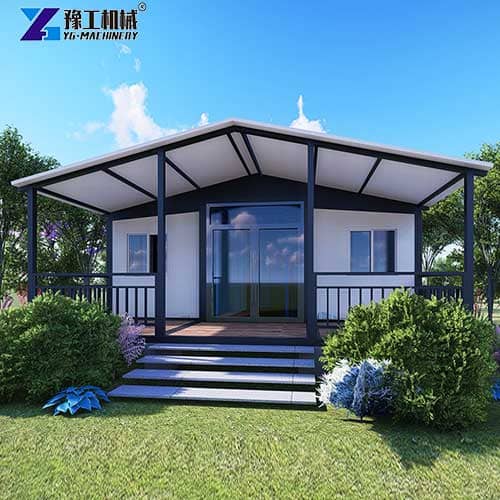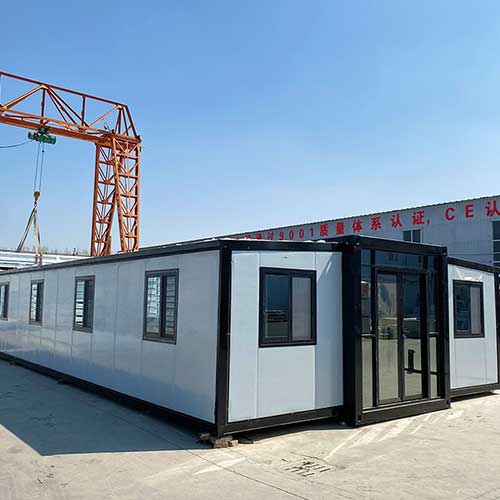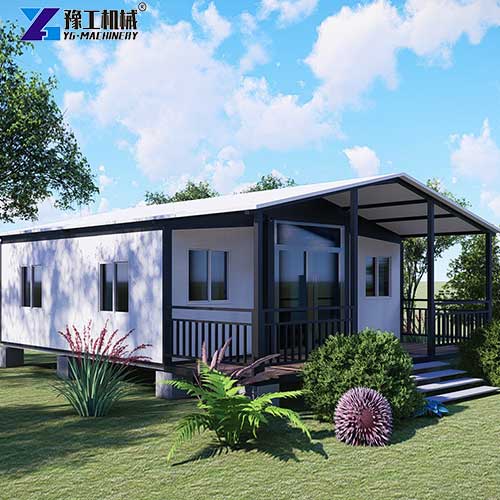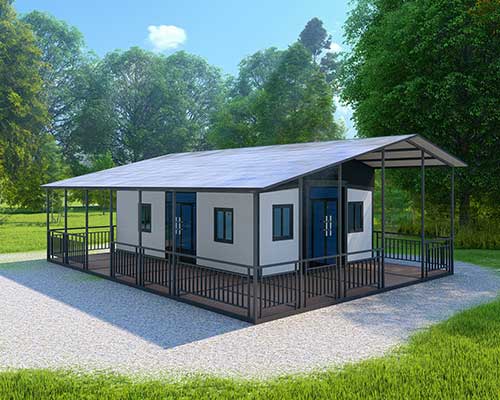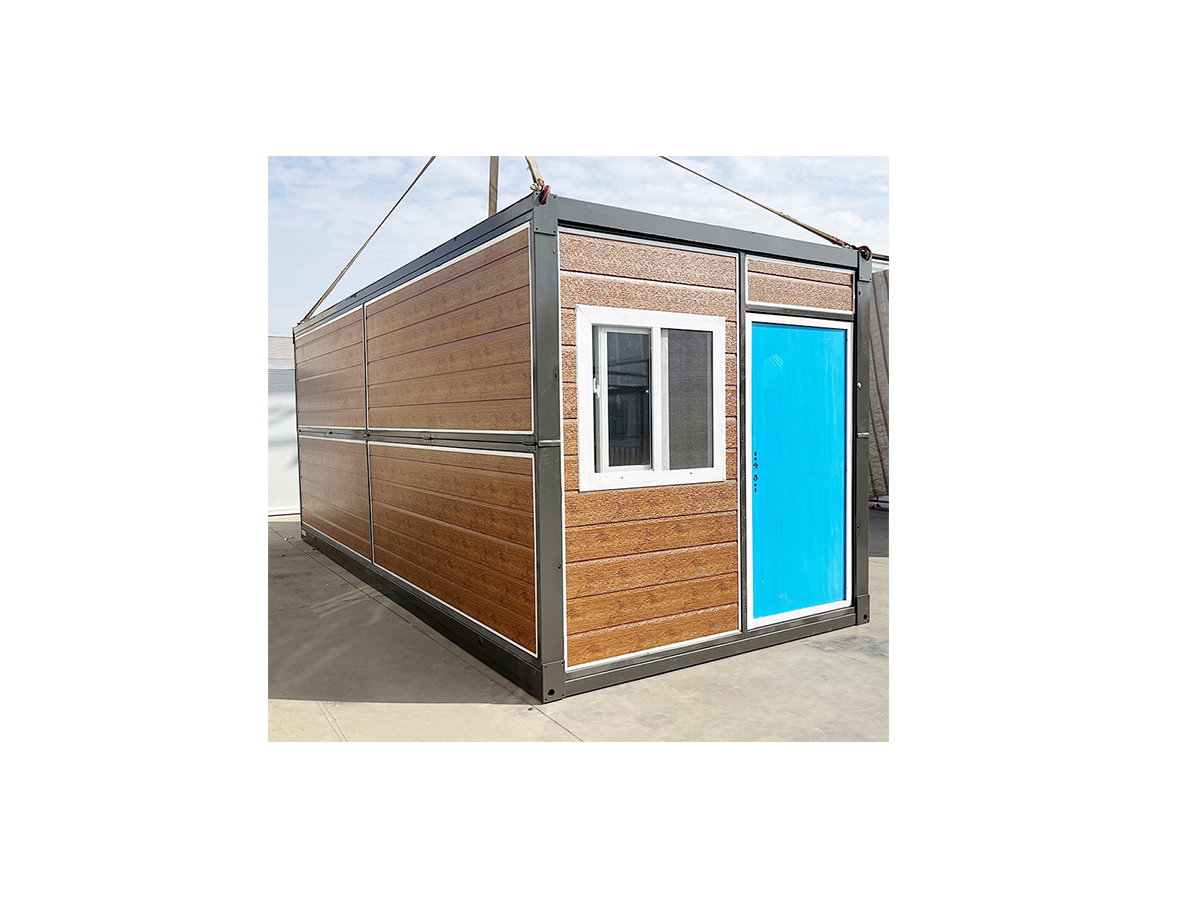
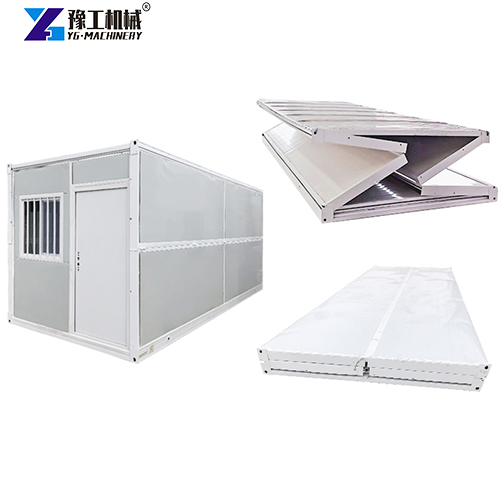
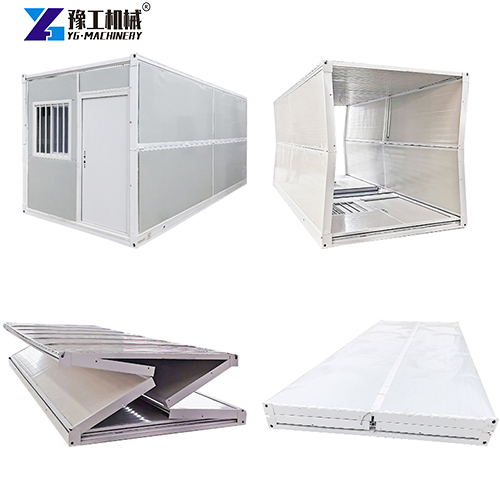
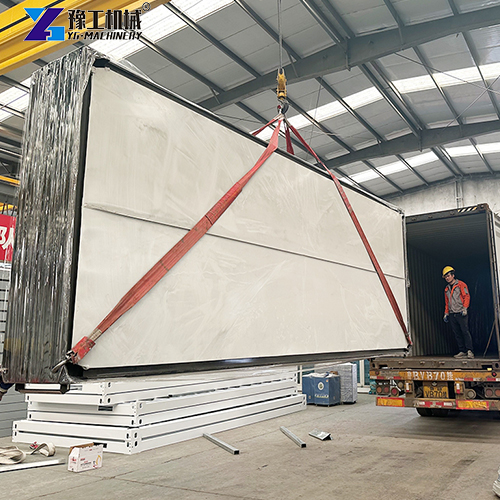
Many customers often hesitate between “small foldable prefab house” and “expandable folding house” when choosing modular buildings. In fact, their positioning is completely different: the expandable folding house aims for maximum interior space after unfolding, while the small foldable prefab house focuses on ultimate transport efficiency and deployment speed. If your project’s core pain points are “time” and “logistics”, then the foldable container house is undoubtedly a better choice. After folding, the height is only about 700mm, and the compact size allows stacking and shipping like ordinary cargo. Meanwhile, its folding container house price is very competitive, allowing you to easily complete camp construction within budget.
Folding House Container Parameters
| Item | Specification |
| Standard Size | Standard Size: 6055×2990×2896 mm |
| Fire-proof Rating | Fire-proof Rating: Grade A |
| Service Life | Service Life: More than 20 years |
| Anti-seismic Grade | Anti-seismic Grade: Grade 8 |
| Wind-resistant Grade | Wind-resistant Grade: Grade 11 |
| Standard Accessories | Standard Accessories: 1 security door, 2 windows, 1 switch, 2 lamps, 2 general sockets, 1 air-conditioner socket, 1 leakage protector, 1 air switch |
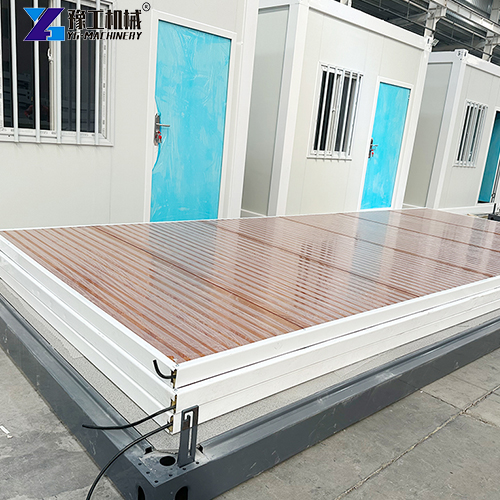
6 Key Features of YG Small Foldable Prefab House
- Ultimate space optimization, direct reduction in transport costs: the folding house container is highly compressed in transport state, with a 17.5-meter flatbed truck able to load 14 units, saving over 60% in logistics costs compared to standard transport modes, especially suitable for overseas clients buying in bulk.
- Quick deployment in 3 minutes, ready for use in half a day: using a “pull-and-push” unfolding mechanism, one person can complete basic unfolding in 3 minutes, and a 3-person team can finish a full installation (including interior fittings) within 30 minutes, making it one of the fastest-deploying temporary buildings on the market.
- Over 20 years of service life and excellent weather resistance: using high-quality steel frames and special manufacturing processes, with anti-seismic grade 8, wind-resistant grade 11, and A-class fire rating, it can be stably used for over 20 years in harsh environments such as tropical, frigid, and coastal high-salt areas.
- Reusable and flexible expansion: it supports multiple disassemblies, assemblies, and reconfigurations. Users can increase or decrease the number of units as projects progress, or transfer entire units between different sites, with extremely high asset utilization.
- Versatile adaptation, multiple uses in one unit: it can serve not only as dormitories and offices but also be configured as shower rooms, kitchens, toilets, medical stations, etc., meeting the needs of construction sites, disaster areas, field operations, and other scenarios.
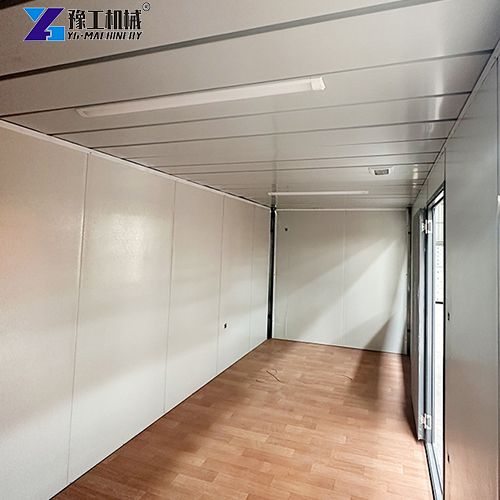
- Complete safety configuration, ready to use upon installation: standard accessories include security doors, windows, lights, sockets, air conditioner interfaces, leakage protectors, etc. No extra purchase of basic electrical parts is needed; it can be put into use right out of the box.
What Is the Difference Between a Small Foldable Prefab House and an Expandable Folding House?
| Comparison Dimension | Small foldable prefab house | Expandable folding house |
| Core objective | Ultimate efficiency: rapid deployment, frequent relocation | Ultimate space: maximize interior usable area |
| Structure type | The entire unit can be folded, like a compressible block | Main body fixed, with two side “wing cabins” that unfold outward |
| Transport state | Very small volume, stackable for transport, greatly saving logistics costs. For example, a 17.5m truck can carry 14 units. | Compact folded, similar to standard containers in transport. One 20-foot container can carry one. |
| Installation speed | Extremely fast; can be completed within minutes. Skilled workers can finish one unit in 10 minutes, and some products even claim “3-minute occupancy”. | Relatively fast, also quick. Usually, installation takes 3-5 minutes or 15-20 minutes. |
| Space experience | Usable area is fixed, matching the original dimensions of the unit. A 3m×6m standard unit has an area of about 18㎡. | Space doubles; area increases significantly after unfolding. Under the same dimensions, the area can be 20%-30% larger than the foldable unit, reaching 21.6-23.4㎡. |
| Combination ability | Usually used as an independent unit; cannot be combined horizontally or stacked vertically. | High flexibility, can be used independently or combined into multiple units to form larger building complexes. |
| Core advantage | Very low transport cost, extremely fast installation, flexible turnaround, a friend of “time” and “logistics”. | Excellent living experience, spacious, high comfort, a friend of “living” and “quality”. |
Application Scenarios of Small Foldable Prefab House
Construction Site Worker Dormitories
- Extremely high deployment efficiency: a camp for 200 workers can be fully set up in just 2 days, much faster than the 5-7 days needed for traditional prefab units.
- Flexible transfer between projects: after project completion, units are folded and trucked to the next site. They can be reused over 8 times, with a per-use cost as low as $0.5 per day.
- Standardized management: uniform units make it easy to manage water and electricity connections, security arrangements, and cleaning, reducing camp operation complexity.
Post-Disaster Emergency Shelter
- Rapid response capability: when disaster-area roads are limited, folding house container’s folding transport advantage triples the load per rescue vehicle, allowing a 100-person temporary shelter to be set up within 72 hours.
- Multi-functional configuration: units can be deployed as shelters, medical stations, supply distribution centers, and temporary command posts – one system meets multiple emergency needs.
- Smooth transition to reconstruction: after the emergency period, the units can be reused as worker dormitories or temporary offices during reconstruction, avoiding waste.
Temporary Offices and Command Centers
- Suitable for remote project sites: at mines, oil fields, hydropower stations, and other locations far from cities, small container foldable houses can build a complete office camp including meeting rooms, office areas, and restrooms within 1 day.
- Plug-and-play electrical setup: standard air conditioner interfaces, sockets, and lighting are included; simple desks and chairs make it ready for use – no extra decoration needed.
- Expandable by combining: multiple units can be side-joined or stacked vertically to adjust office space according to team size.
Large Event Temporary Facilities
- Fast setup and takedown: events like music festivals and sports events usually allow only 3-5 days for construction, and the container foldable house’s unfolding speed perfectly matches the event schedule.
- Flexible functions: units can be configured as VIP lounges, media workrooms, ticket booths, security control centers, or temporary medical points.
- Eco-friendly with no residue: after the event, all units are taken back, leaving the site as it was, with no construction waste – meeting urban environmental management requirements.
Military and Field Camps
- Extreme environment adaptability: with an A-class fire rating, anti-seismic grade 8, and wind-resistant grade 11, the foldable container house can be safely used in plateaus, deserts, rainforests, and other harsh conditions.
- Strategic mobility: folded into a small size, it can be transported by military trucks, helicopters, or cargo planes, meeting rapid deployment needs.
- Complete living functions: can be configured as barracks, dining halls, shower rooms, ammunition storage, etc., forming a fully functional field living area.
Frequently Asked Questions about Container Foldable House
Q1: What is the typical folding container house price?
The price varies depending on configuration, order quantity, and shipping distance. Bulk orders of 10 units or more qualify for tiered discounts. Please contact the YG sales team for a specific quote.
Q2: Can a container foldable house really last more than 20 years?
Yes. It uses galvanized steel frames and A-class fire-rated panels, and with normal maintenance, its service life exceeds 20 years. The steel is treated against corrosion, making it resistant to high humidity, high salt spray, and other harsh environments.
Q3: How many foldable container houses fit in one container?
In standard folded state, a 17.5-meter flatbed truck can carry 14 units. For sea freight, a 40-foot high-cube container can hold 6-8 units, depending on the destination port’s container specifications.
Q4: Is a foundation needed for installation?
We recommend placing the units on a flat, hardened surface (such as concrete or a gravel base). For long-term use, simple strip footings are suggested to ensure drainage and stability.
Supplier of Folding House Container – YG
YG has a complete product line and rich export experience. Our small foldable prefab house has passed multiple international quality certifications and has been exported to Southeast Asia, the Middle East, Africa, South America, and other regions, providing efficient and economical temporary building solutions to customers worldwide. Whether you need 10 units or 1,000 units, YG offers one-stop services from selection consulting and custom configuration to shipping arrangements. Contact YG today to get your exclusive quote.