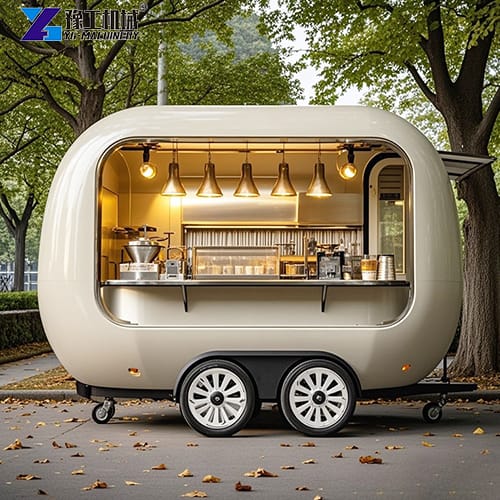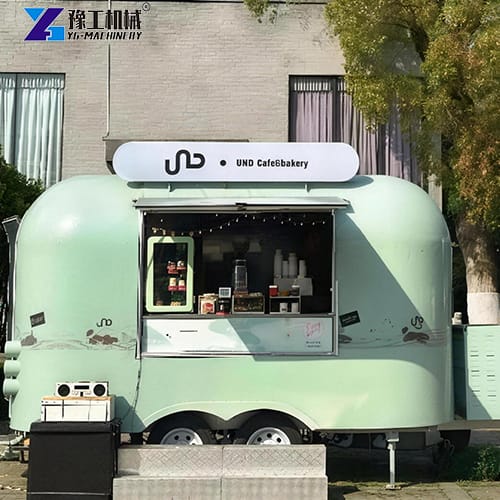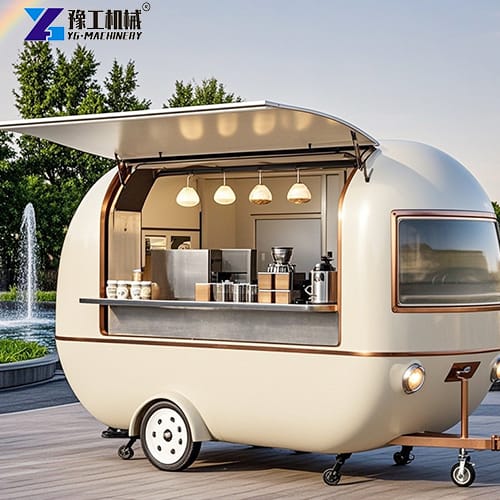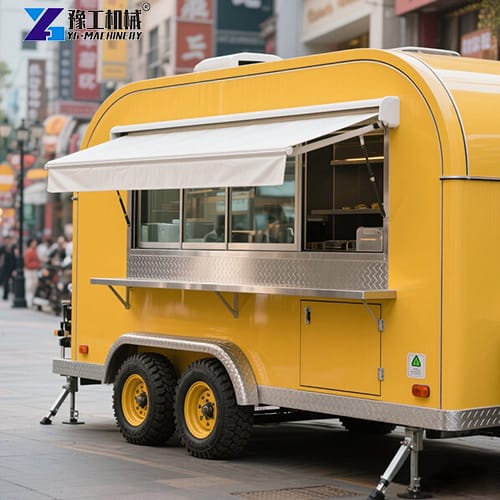
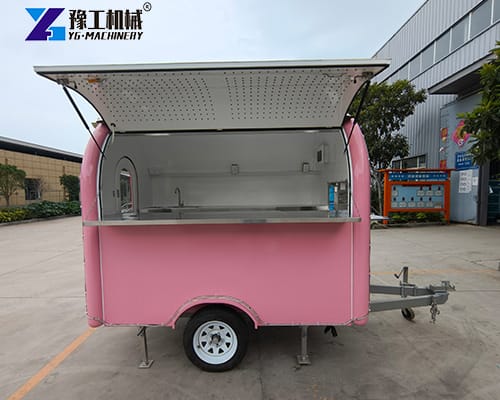
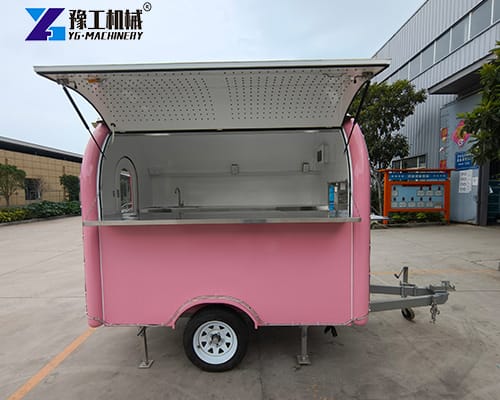
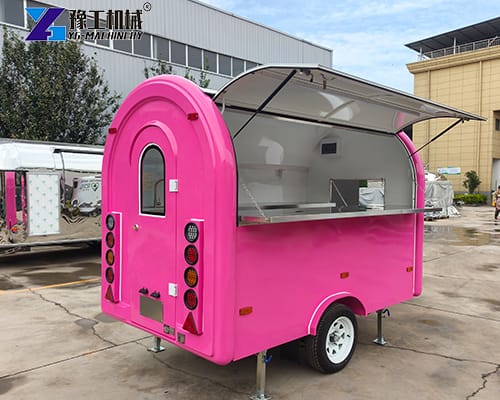
Mobile food businesses are booming. Thanks to their healthy, refreshing taste and quick preparation, Smoothies have become top-selling items at street stalls and market events. Investing in a smoothie trailer is undoubtedly a perfect low-cost way to test the waters of food and beverage entrepreneurship. However, food trailers on the market vary wildly in specs, configurations, craftsmanship, and certifications—one wrong pick can lead to costly mistakes. Don’t worry. This detailed buying guide breaks down every core component of a mobile vending trailer step by step. Pick the right smoothie trailer for you and get your business off to a head start.
Mobile Vending Trailer Specifications
| Default Configuration | Model | Body size/mm |
| Front and rear heads: fiberglass mold Outer wall: galvanized sheet Inner wall: galvanized sheet Floor: anti-slip aluminum checker plate Door: 1 set Windows: 1 large + 1 small (large window includes one outward board) Cabinet: included, 201 stainless steel Water system: double sinks + 2 pcs 25L water buckets Electric system: lights + 2 sockets per meter | 220B | 2200*1620*2000 |
| 250B | 2500*1620*2000 | |
| 280B | 2800*1620*2000 | |
| 300B | 3000*1620*2000 | |
| 220W | 2200*2000*2000 | |
| 250W | 2500*2000*2000 | |
| 280W | 2800*2000*2000 | |
| 300W | 3000*2000*2000 | |
| 350W | 3500*2000*2000 | |
| 400W | 4000*2000*2000 |
How to Equip Interior Gear: Your Must-Have Smoothie Trailer Checklist
A fully functional smoothie trailer requires well-organized interior equipment laid out around workflow and hygiene standards, rather than random clutter. Below is a categorized breakdown of key equipment selection tips:
Core Production Equipment
- Commercial blenders: At minimum two units. High-power models (3+ horsepower) with sound enclosures are recommended. They crush ice and frozen fruit rapidly without creating loud noise for passersby.
- Ice maker: Countertop units producing 50 to 100 kilograms of ice daily to meet peak-hour demand. Choose air-cooled or water-cooled versions based on local climate conditions.
- Sealing or cup lidding machine: Speeds up takeaway packaging and boosts order output.
Storage & Freshness Equipment
- Dual-temperature refrigerator: One freezer compartment for frozen berries and banana chunks, one refrigerated compartment for fresh milk, yogurt, and juice. A capacity of no less than 200 liters is advised.
- Display chiller (optional): Add a small transparent refrigerated cabinet to showcase fresh fruit and drive customer impulse purchases.
Auxiliary & Safety Equipment
- Stainless steel work counter: At least 1.5 meters long with under-counter storage for utensils and ingredients.
- POS payment system: Equipped with mobile payment functions and built-in batteries for outdoor off-grid use.
- Fire extinguisher and first-aid kit: Comply with local fire codes, especially in strictly regulated regions such as California, USA.
Special Note: YG’s workbench layout strictly follows HACCP (Hazard Analysis and Critical Control Points) standards to separate raw and processed ingredients with a streamlined workflow: ingredient prep on the left, blending in the middle, and order pickup on the right. This minimizes cross-contamination and lets you pass health inspections effortlessly.
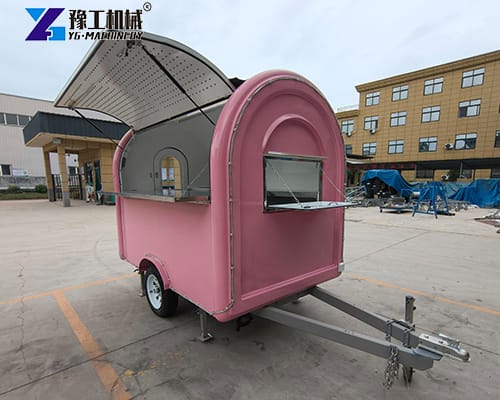
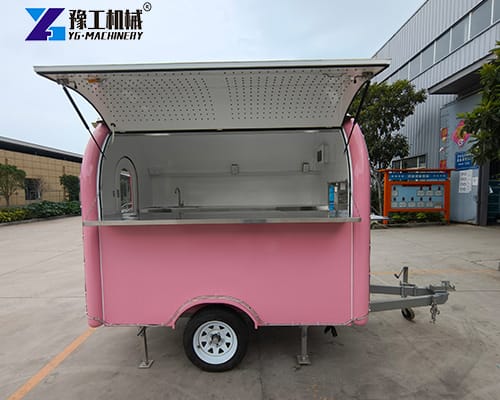
Mobile Smoothie Trailer vs Mobile Smoothie Truck: Which One Should You Choose?
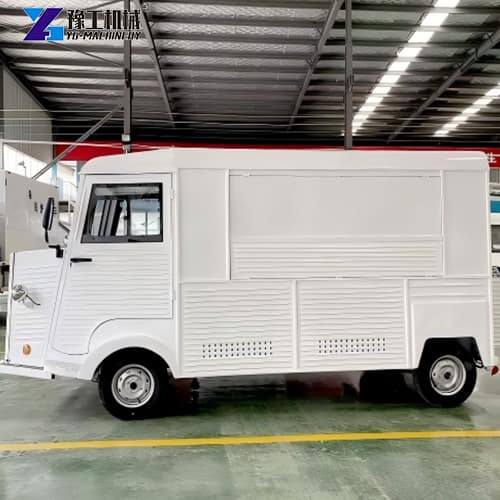
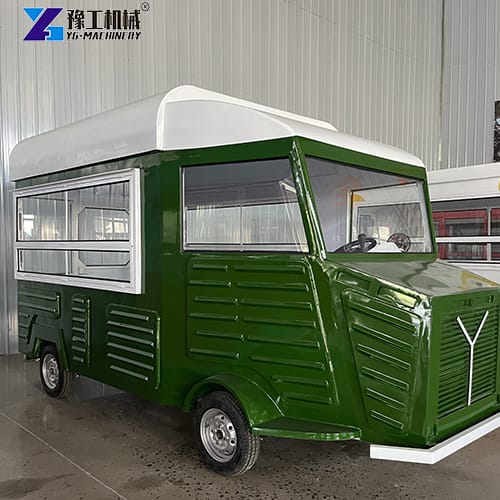
Many entrepreneurs struggle to pick between a mobile smoothie trailer (towable cart) and a mobile smoothie truck (self-driven Citroën-style vehicle). Neither option is universally superior—your choice depends entirely on your needs. We compare the two across four key dimensions:
Power & Mobility
- trailer model: No built-in engine. Tows behind standard sedans or SUVs with a ball hitch. Highly flexible; you can unhitch it upon arrival to use your tow vehicle separately.
- truck model: Integrated engine and driver’s cabin with no separate tow car required. The operator drives and runs the business all in one vehicle.
Cost Investment
- trailer model: Lower upfront purchase cost. Vehicle insurance and road taxes may be waived depending on local regulations, plus simple maintenance routines.
- truck model: Higher base cost. Additional ongoing expenses include annual vehicle inspections, insurance, and fuel, though you avoid buying a separate tow car.
Operating Scenarios
- trailer model: Ideal for long-term fixed spots such as permanent markets, night markets, and school zones; easy to tow with a personal car on a daily basis.
- truck model: Perfect for roaming sales, including festival tours and roadside pop-ups, with a retro eye-catching look that strengthens brand visuals.
Conclusion
If you have a tight budget, already own a personal car, and mainly operate at fixed locations, the trailer model delivers unbeatable value for money. If you want a unique, Instagram-worthy vehicle and don’t mind higher upfront costs, the truck model delivers a stronger brand premium.
Frame Anti-Corrosion: Cathodic Electrocoating vs Traditional Spray Painting — What’s the Gap?
Food trailers stay outdoors year-round, exposed to rain, salt spray, and harsh sunlight that erode metal frames. Rust ruins appearance at best and compromises structural safety at worst. Two mainstream anti-rust treatments are available on the market:
Traditional spray painting: Paint coats only exposed metal surfaces. Inner cavities, weld seams, and tight corners receive incomplete coverage, and paint adhesion is moderate. Neutral salt spray testing only lasts 200 to 400 hours. Trailers used in coastal or rainy areas start rusting at weld joints within one to two years.
Cathoretic Electrocoating (Cataphoretic Electrocoating): The entire frame is submerged in an electrocoat bath. An electric field deposits paint evenly across every metal surface—including inner cavities, gaps and hard-to-reach corners—to form a dense, uniform coating. Key advantages include:
- Superior corrosion resistance: YG frames pass ISO 9001-certified 720-hour neutral salt spray testing, 2 to 3 times more durable than standard spray paint.
- Flexible coating that resists cracking from constant vibration.
- Eco-friendly and cost-efficient with high paint utilization rates.
Strong Recommendation: Whichever vehicle style you select, confirm with your supplier that cathodic electrocoating is used. For mobile vending trailers exported to Europe or deployed in coastal cities, this treatment directly determines whether your trailer lasts five years or a full decade.
Strong Recommendation: Whichever vehicle style you select, confirm with your supplier that cathodic electrocoating is used. For mobile vending trailers exported to Europe or deployed in coastal cities, this treatment directly determines whether your trailer lasts five years or a full decade.
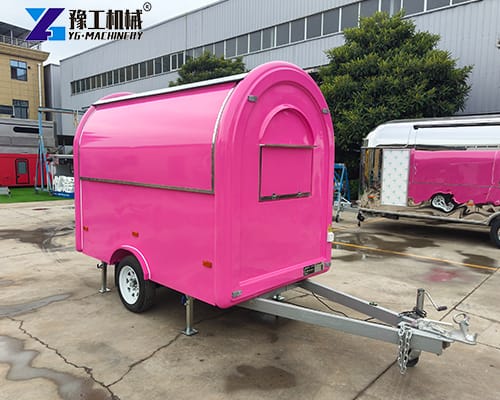
Body Construction: Fully Welded vs Riveted — Which Lasts Longer?
The method of joining body panels directly impacts overall structural rigidity and service life. A side-by-side comparison of the two mainstream manufacturing techniques:
Fully welded body: All metal panels joined with continuous welds to form a single integrated frame
- Pros: Extreme structural strength, strong torsion and vibration resistance with no loose parts or rattling after long-term use; excellent sealing against water and dust.
- Cons: Partial component replacement requires cutting and re-welding during repairs, though reputable manufacturers rarely see faults within the warranty period.
Riveted body: Separate panels fastened together with metal rivets
- Pros: Faster production and lower manufacturing costs; individual rivets or panels can be replaced if damaged locally.
- Cons: Rivet holes loosen over bumpy travel, creating gaps that cause rattling and water leaks. Overall structural rigidity is weak, unsuitable for frequent long-distance relocation.
For a mobile vending trailer that regularly moves between venues, fully welded construction is the safer choice—cutting maintenance headaches and extending service life. All YG models combine fully welded bodies with cathodic electrocoated frames for ultra-sturdy build quality built to last generations.
Why Choose YG?
After reviewing equipment specs, gear checklists, vehicle selection, and manufacturing standards, you now understand the core markers of a high-quality food trailer. YG food carts and trailers set the industry benchmark for all these requirements. Our key competitive strengths are listed below:
- Premium Thermal Insulation: Vehicle bodies use one-piece sandwich panel molding filled with high-density flame-retardant insulation foam. Real-world testing proves the interior stays below 5°C for four straight hours when outdoor temperatures hit 35°C. This lets you pre-chill all ingredients before opening, drastically cutting refrigerator power consumption and utility bills.
- Global Compliance Certifications: YG designs exclusively for European and American markets. All models come standard with FDA, CE, and ETL certifications. We customize sink counts, service window orientations, electrical systems, and safety hardware to match destination country regulations, eliminating the risk of cargo being detained at ports.
- Extended Anti-Corrosion Lifespan: Proprietary cathodic electrocoated frames paired with fully welded bodies pass 720-hour salt spray testing. Trailers retain like-new condition for ten years in humid, rainy, and coastal climates and hold higher resale value.
- Scientific Workflow Layout: HACCP-aligned cabinet layouts create a seamless workflow from ingredient storage, washing, and prep to blending, production, and takeaway packaging. Staff work without repeated turning, letting one person run full operations, and cutting labor costs by over 30%.
- One-Stop Full-Service Support: We offer full customization, including standard-size options and fully bespoke builds, equipment sourcing recommendations, brand exterior graphic design, export documentation handling, and sea freight coordination. YG has delivered units to more than 50 countries with consistent positive customer feedback.
No matter if you pick a mobile smoothie trailer, mobile smoothie truck, or other styles of mobile vending trailer, YG builds profitable, low-maintenance mobile smoothie vehicles tailored to your needs. Contact YG today for your custom quotation and design plan, and speed up the launch of your Smoothie business dream!